






WWF Reveals Mekong River's Remarkable Biodiversity, Urges Action to Protect Endangered Species








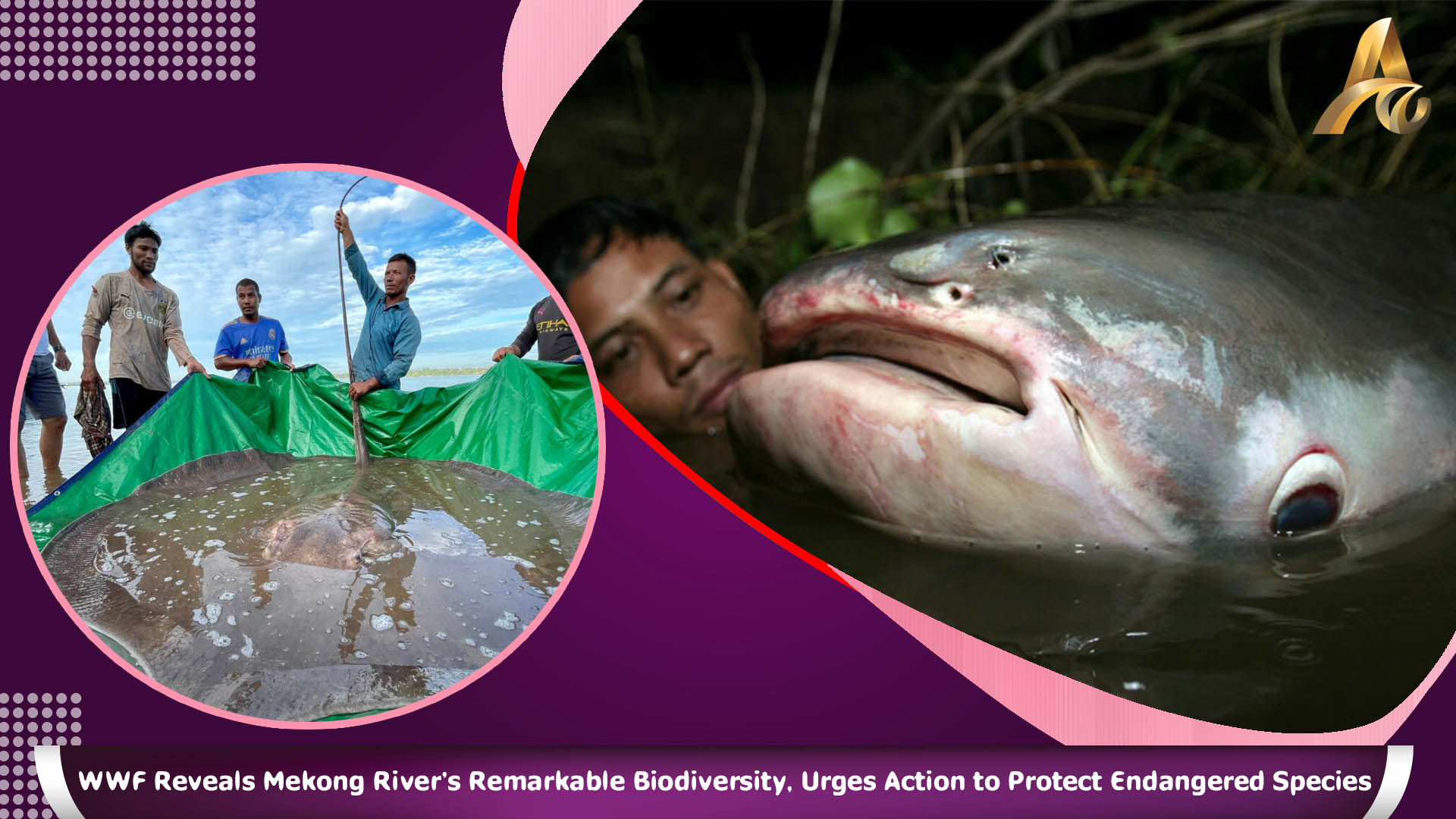
Phnom Penh: The World Wildlife Fund (WWF) unveiled a report on March 5, 2024, highlighting the Mekong River's extraordinary biodiversity. According to the report, the Mekong River, known for its rich array of wildlife, ranks as the third most biodiverse river globally, harboring over 1,148 animal species. It stands out as the most biodiverse river in the world, significantly contributing to the annual migration of approximately 5 billion fish. This migration is crucial for assessing the Mekong Basin's health, which sustains the livelihoods of over 40 million people and bolsters the largest freshwater fishery on the planet.
However, the report brings to light alarming trends threatening this vibrant ecosystem. It notes that one in five fish species in the Mekong River is on the brink of extinction, with habitat destruction, dam construction, climate change, and other hazards causing drastic reductions in fish populations. Some species have seen declines as steep as 88%, raising serious concerns for the region's ecological and economic future.
The WWF stresses the importance of integrating the protection of endangered fish into policy frameworks and enhancing community involvement as critical steps towards reversing these declines. The preservation of historical fish populations is essential not only for the ecosystem but also for the local communities whose lives and livelihoods are intertwined with the health of the Mekong River.
The call to action is clear: immediate collaborative efforts are necessary to safeguard and rejuvenate the Mekong River. By uniting in this cause, there is hope for protecting the river's unique freshwater resources, ensuring their resilience and abundance for generations to come.